by Eric O’Neill, 2025
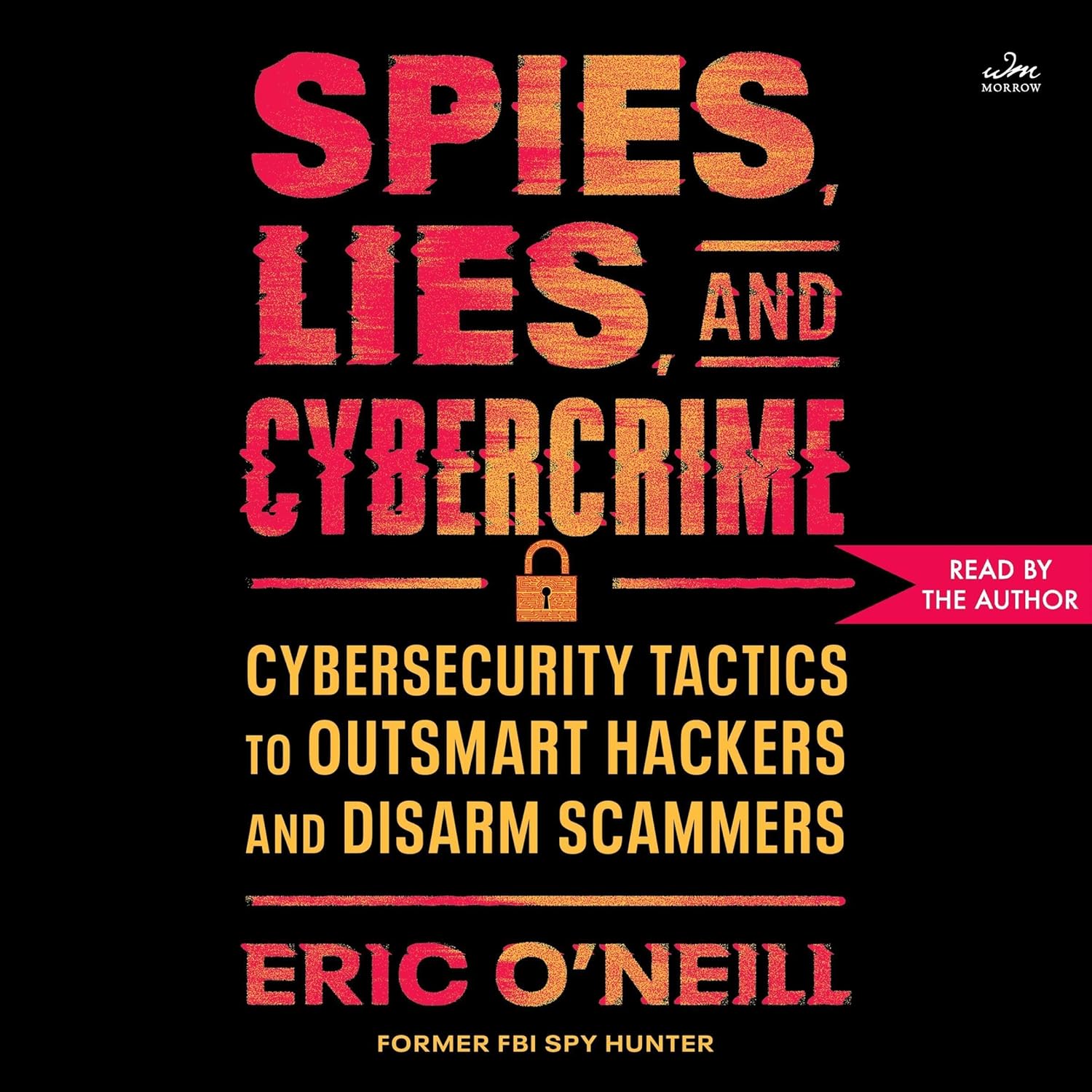 A new arsenal in our war against cybercriminals has just been released, written by former FBI agent Eric O’Neill. Spies, Lies, and Cybercrime: Cybersecurity Tactics to Outsmart Hackers and Disarm Scammers is brimming with information on ways we can protect ourselves against phishing, malware, and deepfakes.
[Links in this post are affiliate links, meaning I earn a small commission on purchases at no additional cost to you.]
O’Neill is someone to be taken seriously—he is the FBI operative who caught the infamous Russian double agent Robert Hanssen, the “most notorious and damaging spy in US history.” (For his undercover work that led to Hanssen’s arrest, read Gray Day.) The case studies that he describes in Spies, Lies, and Cybercrime will make your hair stand on end, and should make any parent think twice before giving their preteen a phone. Here is just a small sample of the cautionary tales in his book:
- A nonprofit charity was brought to its knees by a blackmailer who used the ransomware LockBit (from a Russian cybercrime syndicate) to freeze their global computer network, steal their files, and demand a hefty ransom in bitcoin. As O’Neill was on the staff of this NGO, they had a protocol in place for dealing with cyberthreats, and they eventually outsmarted the criminals.
- A 17-year-old boy got a random message from a beautiful young girl he didn’t know on Instagram. He foolishly got involved in an hours-long chat that led to him sharing a nude photo of himself. The chat then turned sinister: the “girl” started demanding payment, or she would flood his contact list, including his girlfriend, with the photo. He sent $300 but it wasn’t enough, and she demanded more, “or else.” When the pressure got to be too much, he said he might end his life. She told him to do it. The boy, convinced his life was over, got his father’s gun and killed himself. The young girl’s account ended up being an Instagram account purchased and compromised by two brothers in Lagos, Nigeria. They were eventually arrested and extradited to the US, where they are now serving prison time.
- Another 17-year-old named Halima, who came from a strict religious background, came to O’Neill with a related problem. When she was 15, she had sent various nude photos to her boyfriend via the Snapchat application, believing that once she sent the photos, they were deleted from the Snapchat application. But they weren’t deleted. Two years later they were available on the internet by googling her full name plus the words “snap-chat teen pics leaked.” Someone was demanding a $10,000 ransom from her or he would send these photos to her friends, family, and place of worship. The hacker got access to her phone by convincing her to install an app that would scan online merchants to find the best prices on things she normally purchased.
- A mother received a terrified phone call from her distraught 15-year-old daughter who was supposed to be in Arizona training for ski races. The daughter, frightened out of her wits, was exclaiming, “Mom! Bad men have me! Help! Help!” and then kidnappers came on the line, demanding a million dollars in ransom. The kidnappers had used deepfake technology to mimic her daughter’s voice, stolen from online videos she had posted.
You would think a book on cybersecurity would be dry-bones reading, but O’Neill has put these true stories together in a riveting fashion so that it is easy reading for the general public. The bigger picture is clear: we are all at risk if we don’t take cybersecurity seriously.
Each chapter ends with a section called “Think like a spy,” with a list that summarizes how cybercriminals operate and how we can protect ourselves against the attacks relevant to that chapter.
The final chapter is called “The Spy Hunter Tool Kit” and is a treasure trove of information. Everything from securing our phone, our social media accounts, our credit card and bank accounts, using passwords, two-factor authentication, romance fraud scams, guidelines for spotting deepfakes in photos, videos, and audio, and more. These are practical things we can do today to help ensure our data is secure and that we won’t be fooled. (For the audiobook version, he provided a 27-page downloadable PDF that has the same information.)
This final section of the book alone is worth the purchase price.