
I recently became a subscriber to The Atlantic, and they sent out an email with links to eight of their most popular articles from their archives. One caught my eye: “It’s Your Friends Who Break Your Heart,” written in 2022 by Jennifer Senior. It’s subtitled “The older we get, the more we need our friends—and the harder it is to keep them.”
Boy, did this article resonate with me. I’ve started and stopped writing a post on this very subject for about 6 months now. Stopped it because it was so very painful to write. It’s funny, I published my memoir last year and that book almost wrote itself, even though it also dealt with painful subject material. But a post about losing friends? That one has almost killed me to finish.
The Atlantic article covers every possible reason we could lose our friends in adulthood:
“You lose friends to marriage, to parenthood, to politics… to success, to failure, to flukish strokes of good or ill luck… to envy… And I’ve still left out three of the most common and dramatic friendship disrupters: moving, divorce, and death.”
After reading Ms. Senior’s article, where she bares her soul and admits to many friendship failures over the years, it finally gave me the courage to finish the article I’ve struggled with since last September.
Most adults have probably experienced this, but a friendship failure is not nearly as public as divorce is, so we tend to hide these failures away. It’s a different kind of pain, because losing a friend means losing a support system, one that is there through all the ups and downs of family and divorce and work issues and finances and raising kids. It feels shameful to lose a friend because we chose that person and they chose us—and then at some point, they un-chose us—and that never feels good.
Sometimes we know why we were deselected, and sometimes we don’t. Here are two stories of mine: one of each. Maybe you can relate to one or both of these.
* * *
“Megan” and I purchased season tickets to the Houston Ballet together, after my husband made it clear that he was no longer going to suffer through these performances. It was yet another casualty of married life: while the single man would graciously go along with his adored fiancée to things such as the ballet, once the knot was tied, he no longer felt any compunction to feign interest in classical dance, music by Tchaikovsky, or tutus.

It turned out that going with Megan proved to be much more enjoyable anyway. Getting dressed to the nines and going downtown to the Wortham Theater, Houston’s premiere performance venue, with your bestie, someone who truly enjoyed the ballet, was far preferable to going with someone who was bored by the whole thing. We always made a grand night of it, taking in dinner at one of the fancier downtown restaurants, drinking champagne, and having a great time people-watching at the Wortham. In Houston, people dressed spectacularly for the ballet and gawking at the other attendees was always part of the experience.
But alas, Megan’s husband worked for an oil company, and said oil company decided to transfer him to their Anchorage office. After a year of this cozy arrangement, I would lose my ideal ballet companion early in the season of our second year. We only saw the first performance the second season when they got their transfer notification, so the remaining five ballets were lost to us.
Another friend, “Rita,” heard of their transfer, and offered to buy out the remainder of Megan’s season tickets that year. While this seemed like the perfect solution on the surface—Megan wouldn’t have to eat the rest of those expensive tickets and I wouldn’t have to attend the rest of the season alone—I quietly had misgivings about this arrangement. My relationship with Rita wasn’t nearly as smooth and problem-free as it was with Megan. I had my reasons for not asking her in the first place.
I’d known Megan since the day I’d landed in Houston—we worked for the same company. She was literally next door in my office, and wandered in when she could see that I looked overwhelmed and scared on my second day at work. We became fast friends and she was my lifeline for everything in Houston—I got incorporated into her personal life, her friend network, her party circuit, her support system. We became so close that I was in her wedding and she was in mine. It’s safe to say she became my female soul mate.
Rita was a different story altogether. I met her a few years later in the Sierra Club on a singles backpacking trip to the Grand Tetons in Wyoming. Her sharp sense of humor initially made me laugh and we struck up a friendship during that trip. But I quickly learned that her sharpness could be caustic and cut both ways. Over time we became good friends, but she was also jealous, especially of my closeness with Megan. She started to compete with Megan for my attention. And about 50% of the time when we planned anything together, whether it be a short trip out of town, or dinner at a restaurant, or a night out with her other friends, something inevitably happened that soured the experience. Because of her controlling nature, the potential for conflict and flareups was always high. So the whole idea of her taking over these ballet tickets put me on edge.
The first two performances Rita and I attended together went without a hitch, and I started to relax. Maybe we could do this together. We followed much the same routine as Megan and I did, getting dressed up and either eating dinner out beforehand at a restaurant, or taking advantage of the pre-performance dinner offering at the Wortham itself. If you made reservations in advance, they would serve patrons dinner right in the lobby and then serve dessert during one of the intermissions. This was quite convenient—you just arrived at the venue earlier and stayed put the entire evening—no racing around downtown getting from one place to the next, jockeying for parking twice (always a major hassle in downtown Houston) and worrying about being late for the performance.
Our tickets were up in the Grand Tier that year; not the best seats, but Megan and I bought them too late and season tickets were next to sold out. During the third performance, several seats in the row in front of us were vacant because the people were no-shows. After the first intermission, we settled back into our seats. The house lights went down, and only the dim safety lights along the stairs were lit. The ballet started up again.
But for the whole second half of the performance, I noticed that Rita was distracted—she wasn’t paying attention to the stage much at all. She was riveted by something on the floor by those empty seats in front of us. Out of the corner of my eye, I’d catch her head turning, staring at something there. Every time her head turned, she distracted me as well, and I fought to keep my eyes and attention on the stage.
I couldn’t for the life of me imagine what was so fascinating down there. Did someone lose their diamond ring? A tennis bracelet, a sparkly necklace? Ladies wore lots of bling at the ballet, and that was the only thing I could think of—that something valuable had slipped off someone’s hand or neck, unbeknownst to the wearer, and Rita had spotted it.
I intended to ask her at the end of the show. But before I had a chance, the curtain came down and the final ovations for the performers started up. First the ballet corps, then the soloists, then the principal dancers made their bows in turn. We all stood, clapping heartily in appreciation. It was time to go.
The house lights came on and people turned to exit the theater. In the next moment, I watched in shock as Rita made a dive for the floor to grab whatever it was she’d been fixated on, one row in front of us. As the other people around us were heading in the opposite direction, toward the doors in the back of the theater, they got shoved out of the way in the process.
“Rita! What on earth…?!” I exclaimed.
“Just had to get that before anyone else noticed it!” she whispered in triumph as she returned to my side, ready to exit the theater now. She was beaming as if she’d won the lottery.
She opened her hand to show me: a quarter, two dimes, and a penny.
“You have got to be kidding me. That’s what you were staring at for the last hour?! That’s what you shoved people out of the way for? Do you realize how rude that was?” I whispered incredulously at her.
“What? Money’s money. I saw it, I didn’t want anyone else to get it. What’s the big deal?”
I couldn’t believe what I’d just witnessed. My friend had a master’s degree and a well-established career as a professional; she was also married to someone who was doing very well financially. To dive at loose change like some homeless person spotting money on the sidewalk—I was appalled at her lack of decorum and manners. Especially in a place such as the ballet, where we’d spent a pretty penny just to be there. The whole irony of the situation seemed to escape her.
We drove home that night largely in silence. It was difficult to process what I’d seen and even more difficult to bring it up between friends.
* * *
About six weeks later, the next performance came around. This time we decided to make reservations to eat dinner at the Wortham lobby and avoid racing around downtown before the show. The food was good but it was definitely overpriced; much like museum and airport cafes, they knew people were eating there out of convenience and they had a captive audience.
For dinner I’d preordered chicken marsala and Rita preordered chicken Waldorf salad. We were looking forward to the evening, enjoying a glass of wine while waiting for our entrées to arrive. Rita’s mood changed instantly when her entrée was placed in front of her. As the waitress started to walk away, she called out in a loud voice.
“Ma’am, can you please come back here?” and she gestured toward her salad.
The waitress walked back to our table and asked, “Yes? Is there a problem? You ordered the chicken salad, correct?”
Rita replied, “Well, yes. And there’s supposed to be chicken on it.”
The waitress looked confused. “There is chicken on it.” I too saw chicken on the salad.
Rita’s voice got louder. “For this price…” She stopped, then started again. “For the amount of money I’m paying for this salad, there should be much more chicken on it.”
The tables were close together in the lobby, so it was easy for this conversation to be overheard. The other patrons were starting to look over at us.
The waitress replied, “Ma’am, that’s the amount of chicken that comes on every chicken Waldorf salad. They are all the same.”
Rita yells at her, “PLEASE TAKE THIS BACK TO THE CHEF AND HAVE HIM ADD MORE CHICKEN TO THIS SALAD.”
Now bullied into submission, the waitress had no choice but to take the offending salad away. I wanted to disappear under the table. I prayed that no one I knew was attending that night and eating dinner in the lobby. I sat there in stunned silence as Rita tried to justify herself.
“Can you believe it? For that price, and they give me a few measly strips of chicken!” I didn’t want to get into an argument with her or make the situation worse, so I just sipped my wine and hoped the new salad was going to be the end of this scene.
A few minutes later, the grim-faced waitress reappeared with a new Waldorf salad, now piled high with chicken. She placed it in front of Rita and asked if it was now satisfactory, to which Rita replied, “Yes, thank you very much.” I started in on my now-cold entrée, as I had waited until her salad arrived so we could eat together.
Once Rita got what she wanted, her foul mood was transformed and she was chipper again, chattering away as she ate dinner and enjoying the ballet afterward. She didn’t seem to notice how the incident affected me for the rest of the evening—I felt the whole night had been spoiled. I almost never send food back to a restaurant kitchen because I’ve heard stories about what waitstaff can do to your food. But more importantly, it was just so unseemly for an elegantly dressed woman attending an expensive event to be fussing over a few dollars’ worth of chicken.
I didn’t know what was at the root of Rita’s grabbing at loose change and now this. But I was really beginning to regret sharing these season tickets with her. If it stretched her budget that much to do these events with me, I wished she hadn’t done it in the first place.
* * *
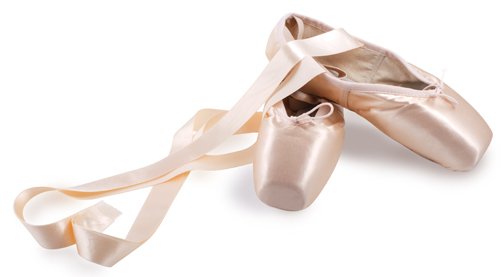 The final performances of a season are always crowded on the schedule, so the last ballet was only two weeks later. This time, I decided I was not going to eat out with her. I made up some excuse about having to work late that day and I would just catch a quick bite at home, and all I could do was attend the performance.
In Houston, the final ballet of the season is almost always a crowd-pleasing story ballet. The choreography, costumes, and performances were spectacular and I was mesmerized. But I noticed Rita wasn’t smiling as much as she usually did during a traditional ballet—they were her favorites too. Her mouth was set and she was stone-faced, especially during the last act.
When the final curtain came down and all the ovations were over with, the house lights came on. We were ready to go. The audience stood up and started to gather their things. At that moment, Rita rounded on the couple sitting on the other side of her like a wild animal.
“You two should have stayed home! You talked during the entire performance like you were sitting in the middle of your living room! Didn’t anyone teach you any manners?! You ruined this entire performance for me.”
The couple looked at her with shock on their faces. Before they had a chance to formulate a response, Rita turned around and exited our row. I too was appalled at what Rita said.
“If they were talking during the performance and it was bothering you, why on earth didn’t you just shush them? Why did you let it ruin your night?”
“Oh, I would never say something during the performance. Then it would have bothered everyone else around us as well. But that just makes me furious. Didn’t you hear them?”
“No, I didn’t. And Rita, that makes no sense. If they were talking loud enough that you thought it was ruining the performance for people around them, including you, there were about five other ways you could have handled that. You didn’t even give them a chance to say anything, or apologize! I hope you know, you just ruined their night too.”
“Good. I have no interest in their apology. They need to learn how to behave in a public place.”
That was the end of me ever attending any formal event with Rita. I was done. The next year when it came time to purchase season tickets for the ballet, I took the coward’s way out. Rather than tell her the truth, that I didn’t want to attend with her anymore, I told her I wasn’t interested in the program that year—that I’d seen all of them before and didn’t feel like spending the money again. In reality, I bought a single ticket and attended myself. It was a shameful way to handle it, but I couldn’t face having another confrontation with her.
* * *
A few years later, my husband and I were divorced and I was dating someone new named “Paul.” One of the things that drew us together was our mutual love of the arts. Paul was an artist himself and we decided to move south, to Rockport, Texas, to start our own art gallery showcasing his work and the work of other artists we admired. The Bayou City Arts Festival, which took place in Houston twice a year, was one place we found the artists who we represented.
I was already living in Rockport and I drove up to Houston specifically to attend the arts festival. In past years I had attended this festival with Rita. She was aware of our progress on our business venture and she also knew the artists who I hoped to represent in the gallery. But that year, in the spring of 2005, I attended the festival with Paul instead so we could make joint decisions on the artists.
Paul and I had just arrived at the festival on Saturday morning and were milling around in the crowds when we spotted Rita and another girlfriend. We all waved and moved toward each other to say hello. They had already been there for more than an hour.
Rita was bursting with excitement. “Gail, we’ve already been down this row of booths. We saw [XX] and talked to him. I told him all about you guys buying that property down in Rockport for the gallery! I told him you were coming today and you’ll probably be asking to represent him in your gallery! So he’ll be looking for you to come by…”
She stopped when she saw the horrified look on my face. I looked at Paul, who was also stunned. I could not take the coward’s way out of this one.
“Rita, that was not your news to share. We haven’t told any artist about our plans yet, or that property. We hadn’t decided for sure about that artist yet—Paul hasn’t seen his work yet! What are you doing?! Please don’t say anything to anyone else here today!”
She was so taken aback at my direct confrontation that she spun around, grabbed her friend’s elbow, and walked quickly away.
I was so surprised at her reaction that I said to Paul, “Did I do the right thing? She was off-base there, wasn’t she?”
He replied, “Oh, you bet. If you hadn’t said something, I would have.”
The whole thing put me ill at ease for the rest of the day. I second-guessed myself and everything I’d shared with her in the previous six months or so. Of course, with Rita being a close friend, she was privy to my developing relationship with Paul and our growing interest in creating something for ourselves: this art gallery. Once the decision to do so became more concrete and we moved ahead with those plans, I thought surely she would have the discretion to know what should be kept confidential and what could be shared.
My interest in the various artists had transitioned from a mere occasional transactional one to a business proposition where we would both benefit from the arrangement. Who I would sign those consignment contracts with suddenly changed everything. It astonished me that she didn’t get that, and that day I slowly realized that my relationship with her had to change drastically. She couldn’t be trusted.
I also had to consider something that had never occurred to me until that day: Rita was also jealous of Paul. He’d consumed my time and attentions, and now I’d moved away from her to pursue a dream that maybe had been a dream of hers. She and I had often talked about volunteering for the arts festival and working more closely with the artists, but it was all just idle talk. Now, I had gotten serious about something that had only been a fantasy for her, and she was being left behind. It was time for a serious talk with her.
I never got that chance. She cut me off like a rotting tree branch. The next week, back home in Rockport, I received an email from Rita, telling me off in no uncertain terms. She wanted nothing more to do with me. No more contact, ever. My behavior at the arts festival was unacceptable; I was rude, surly, and acted reprehensibly toward her.
A few weeks earlier, she had attended the girls’ getaway weekend I held at my home in Rockport (which I describe in Ch. 17 of my memoir), and said in the email that I “was awful to her the entire weekend.” It floored me as I read this, as I only had great memories of that weekend. I remembered no tension whatsoever; in fact, the week after, she’d sent me a sweet thank-you note, with no hint that anything was wrong. So, I thought, which was it? Did you have a great time, or were you miserable the entire weekend?
She wrapped up the email by saying she “wanted only kind, loving and respectful people in her life who were capable of a two-way relationship.”
The shock of reading that email was palpable. I sat frozen in my desk chair for an hour or more, rereading it. Her interpretation of events, of our relationship, was so polar opposite of mine that it gave me pause. Who was right here?The whole email was so out in left field—and I didn’t know the term “gaslighting” at the time—that I didn’t know what to make of it.
I wrote her back, trying to get her to see my point of view with regard to divulging private business discussions. I apologized for offending her. I told her that to just cut off a decades-long friendship was not the way to move forward—that surely we could just talk about this? (She was a professional therapist, after all.)
I followed up my email with a few phone calls, both to her home and her work phone. They all went to voicemail so I left messages. I never heard back from her again.
I know that I’m far from a perfect human being—I’m well-aware I can be a bitch. But among intimate friends, there’s an expectation that we have a built-in tolerance for each other’s flaws and an expectation of forgiveness. We both crossed lines with each other. I’ve also been through enough therapy to know that there are always two sides to every story. But her version of events, especially that girls’ weekend at my house, was so far from reality, that I had to wonder about her mental stability.
The fact that she refused to discuss these issues with me, to ever return my calls, was something I couldn’t respect. It seemed as if she wanted the drama of this sudden friend breakup, and patching things up with me would rob her of that.
A few weekends later when Paul drove down from Houston, he asked me how I was feeling about it all. After thinking about it a minute, I replied, “Honestly? Relieved.”
He looked at me, surprised. “Really? Not sad, or depressed?”
“You know, I’ve been struggling in this relationship for years now. I’ve probably hung on much longer than I should have. You know that phrase, ‘walking on eggshells’? That’s the way it always was with her. I never knew what was going to set her off. It’s just bloody ironic to learn that she felt the same way about me and she’s the one who pulled the plug on the whole thing.”
* * *
And Megan? My female soul mate? What a different story that turned out to be.
The perfect friend, the one where there was no conflict whatsoever, the one I felt joined at the hip to…she just faded away. I haven’t heard from her in 10 years.
If I had to categorize this one (going back to that Atlantic article) I guess I’d have to put this one down to a moving loss. Once their employer started transferring them to far-flung parts of the world, they didn’t stop. First it was Alaska, then London, then Egypt, with only brief stopovers back in Houston before the next transfer order came down. Amazingly, we managed to stay close through it all: through the wonders of the Internet and free long-distance calling plans, we kept in close contact and a vital part of each other’s lives. My husband and I visited them in Anchorage. I visited her in London. The only reason I didn’t make it to Cairo was because I was unemployed at the time and couldn’t afford the trip.
Her husband retired in 2016 and they repatriated to New Orleans, where his family lives. This was when a subtle shift took place in our relationship. I thought, Great! We can finally pick up where we left off! But she wasn’t thinking along the same lines. After a brief meetup in Colorado where they were settling their daughter in college (I happened to be vacationing in the area), I never saw them again. A few emails were exchanged as they were getting settled in New Orleans. They bought a new house but I wasn’t invited to the housewarming party. She had knee surgery after a bad skiing accident but I wasn’t privy to any of her detailed recovery, as I normally would have been. Months would go by between communications—unheard of for us.
When Hurricane Harvey hit in the fall of 2017 and I didn’t hear from her, I knew our friendship was over. When your hometown gets devastated by a natural disaster and you don’t hear from a best friend—someone who normally would have rushed to your aid in a heartbeat—that resounding silence hurt more than anything. I remember thinking: I’ve heard from complete strangers to see if I was OK—authors whose technical papers I’d worked on and they somehow remembered I lived in Rockport—but I didn’t hear from Megan, not once. And I couldn’t reconcile that in my head or my heart.
Nothing had happened between us. No incident. I couldn’t point to an event, like I could with Rita, and say, “That was it. That was the day our friendship died.” When did Megan stop caring, and why? I’ll never know.
Megan was a central character in my memoir, because 20 years ago, she was still a vital member of my support circle. While I was writing my first draft, I made one last-ditch effort to reconnect with her, and to let her know the book would be coming out and to ask permission to use her real name. I emailed her, tried to call her, and even sent a physical letter through the mail. All these efforts went unacknowledged and she did not respond. So I kept her in the book but changed her name, and drastically reduced much of the quoted material attributed to her.
* * *
There have been many people come and go in my life. Some were childhood friends that stayed engaged for 50 years before disappearing; some were work colleagues; some were people I met doing volunteer work; some date back to student days. I guess these two stick in my mind not only because of the time invested in the relationships, but because of the stark difference in the why of their disappearance.
I wrote about another friendship loss back in 2022, that one mostly over political differences (Ghosted by a Friend Over Trump). That friendship snapped over the 2020 election, but was complicated by the stresses of the Covid pandemic and unemployment.
Oddly enough, when one gets a divorce, the world knows about it. There’s a date stamp on that baby. Official papers get filed. Household goods get divided, and change-of-address forms get mailed. We know what to do with that one. But when a friend relationship fails, it’s a much more slippery deal. Many times there is no date stamp, no cause and effect. And there is no support system for these kinds of failures. More often than not, we suffer in silence over that giant hole in our lives. All we know is, that person who used to be our automatic go-to when we had good news or bad, is gone. We can’t pick up the phone because they won’t answer it.
All this has made me wary to try again, to invest the time again at this stage of my life. I’m less trusting now and less willing to offer grace. As the Atlantic article said, I’ve “aged-out of the friendship-collecting business.”
* * *
If you have any comments about this post, feel free to share them in the Comments section below. If you feel this post will resonate with someone you know, please share it!


5 Responses
Hi Gail, Your stories really triggered a lot of feelings that I just kept buried. My husband Paul and I had some really great friends prior to retirement. Once we retired and moved to the coast of Washington it was like they vanished. We would continue to invite everyone to the beach where in the past we all congregated at our beach house in the summer. What great fun we all had. Now it’s just sad how no one has time anymore. Anyway, I love your stories and the way you write them.
Kathy,
Yes, and these are losses no one talks about. Death, yes, and divorce, yes. But the loss of good friends for whatever reason, you don’t hear it discussed much. It’s the ones who disappear without a trace and without an explanation that are the hardest to accept. It seems we all have someone like that. I’m glad something I wrote resonated with you. Thank you for commenting.
I loved all of the stories you written, I am so very proud of you, I know how much time in writing and all the wonderful things you do and love doing. How is your weather. Sorry about your flowers with snow. I bet you miss the flowers in Texas. It is hot already. Love you. Marilynn
Thanks Elsa, hope it’s useful for you.
Oh, how’d I miss that Atlantic story (just like for the NY times, as oldsters we get the paper and the online versions, albeit my reading of the paper ones is usually a good half-year behind for the Atlantic; for the Times, it’s a few days at most).
Thank you for calling my attention to this, have been thinking on this topic lately, let me read your post and ruminate more! – elsa