
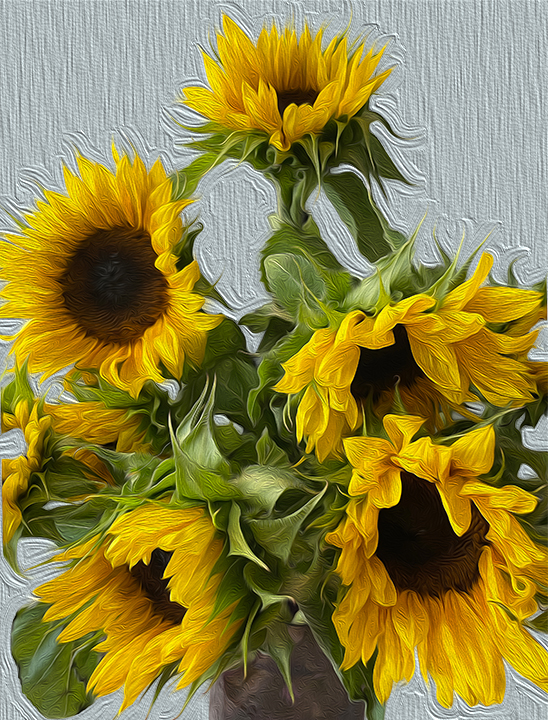
Today in history we lost one of the greatest artists the world has ever known: Vincent Willem van Gogh died on July 29, 1890. He was a Dutch Post-Impressionistic painter who produced most of his 2,000+ paintings in the final decade of his life. He became known for landscapes, portraits, still lifes, and self-portraits. In his most prolific period, he moved to France, where his association with Émile Bernard and Paul Gauguin helped develop his personal style into the bold strokes with brilliant colors we associate with his works today.
He took his life at only 37 years old, following many years of mental illness and poverty. He sold only one painting during his lifetime. Six months later, his younger brother Theo van Gogh, who was Vincent’s benefactor and caretaker, also died of grief at the loss of his brother.
Theo van Gogh was an art dealer and owned most of Vincent’s paintings at the time of his death. We can thank Theo’s widow, Johanna van Gogh-Bonger, for the fact that we know anything about Vincent’s work today. Like Theo, she believed in Vincent. She preserved all his paintings and tirelessly worked to get them into galleries and museums. In fact, she became the first female art dealer of her time.
She not only saved Vincent’s artwork, as a Dutch editor and translator, she published most of the more than 600 letters that were exchanged between Vincent and Theo throughout their lifetime, thereby preserving the record of Vincent’s life and their remarkable relationship.
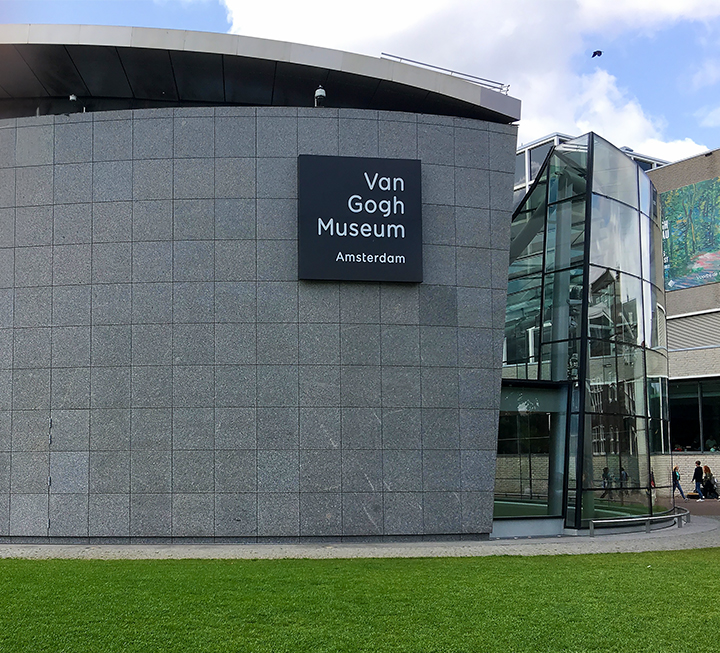
Johanna and her son Vincent Willem founded the Van Gogh Museum in Amsterdam, which opened in 1973. When I visited Amsterdam in 2017, this museum was on my must-see list. To stand in that museum and be surrounded by the real thing—room after room of Van Gogh’s work—was an overwhelming experience. To think that this entire museum was filled with a single artist’s work, a painter who was considered a madman and a failure by his peers when he died—it was an astounding achievement. She not only knew brilliance when she saw it, but she would not let the misperception of who he was be our lasting memory of him.
She single-handedly turned around the world’s opinion of Van Gogh, and he is celebrated today because of her.
To learn more about Johanna van Gogh-Bonger and how she preserved Vincent’s legacy, these books are available [affiliate links]:
- Jo van Gogh-Bonger: The Woman Who Made Vincent Famous, by Hans Luijten (senior researcher at the Van Gogh Museum), 2022. A comprehensive 544-page biography detailing her life using personal diaries, archives, and letters.
- The Secret Life of Sunflowers, by Marta Molnar. 2023. I wrote a review of this book last year. It’s half historical, half fiction, with a dual timeline. I enjoyed the historical part and learned a lot from it; the modern timeline was a tosser, in my opinion.
- In her own words: A Memoir of Vincent Van Gogh (Lives of the Artists) by Jo van Gogh-Bonger and introduction by Martin Gayford (release date on Amazon is 2018; I couldn’t find the originally published date). Her own short account written to preserve the true history of Vincent and Theo.
- The Letters of Vincent van Gogh, by Vincent van Gogh (2024; originally published in 1958). His archive of letters to his brother Theo. I include this for anyone interested. Available only in Kindle format.
Johanna died at the age of 62, in 1925, suffering from Parkinson’s disease. She died in the Netherlands, still managing the sales of Vincent’s works and translating his letters, right until the end.
I love heralding stories about amazing women in our world. I hope you enjoyed this one.
I invite your comments or feedback below! If you know of anyone who might enjoy this story, please share or repost on your favorite social media.

